
Obesity ICD-10 Code for Smart Healthcare

Table of Contents
Why the ICD-10 Code is Important
Obesity is the leading cause of health issues that are among the most serious in the world; it is a significant contributor to diabetes, heart disease, and, along with that, it lowers the quality of life. Health care providers need the obesity ICD-10 code to ease the treatment process, to be able to bill insurance smoothly, and to take care of the patient in the long run.
Whatever it is you are coding, i.e., class 1 obesity ICD 10, class 2 obesity ICD 10, or severe class 3 obesity ICD 10, you must first of all be accurate. This manual will identify the most important code, and with the E66.01 diagnosis code explanation, it will provide all the necessary information, such as the history of obesity ICD-10 and childhood obesity ICD-10.
What is Obesity in ICD-10
ICD-10 (International Classification of Diseases, 10th edition) is a system of codes that standardizes the classification of medical conditions. The obesity ICD-10 is a very comprehensive one, which gives all the necessary information about the severity, the type, as well as the possible causes of the disease.
Obesity coding significantly influences the insurance reimbursement rate; however, it also plays a role in monitoring global health trends, and thus is an integral part of contemporary healthcare.
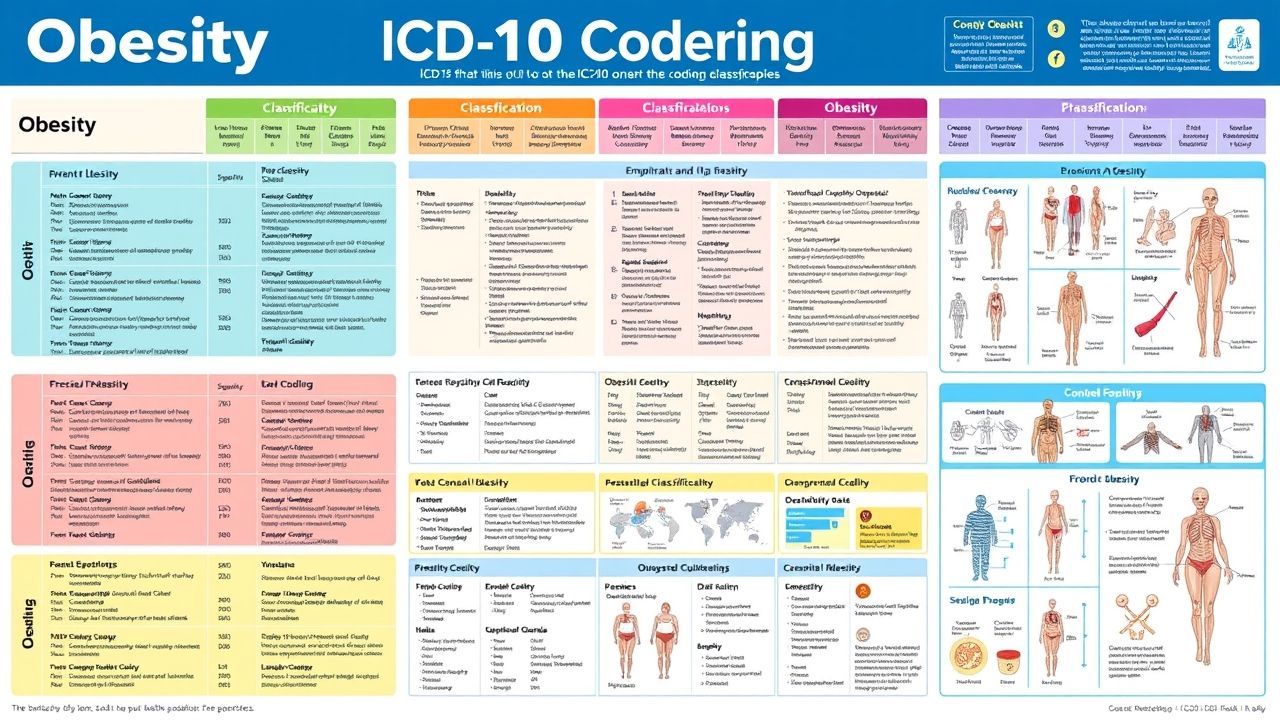
Breaking Down the Obesity ICD-10 Codes
The major obesity here is a close look at the ICD-10 code, each healthcare professional should know:
1. Class 1 Obesity ICD 10
- Defined as a BMI between 30.0 and 34.9.
- Code: Common E66 category for obesity falls.
- Often, the initial point of medical obesity intervention is considered.
2. Class 2 Obesity ICD 10
- Defined as a BMI between 35.0 and 39.9.
- The more serious health risk than class 1 indicates.
- It is used for patients who often require structured weight management.
3. Class 3 Obesity ICD 10 (Severe Obesity)
- Defined as BMI 40 or greater.
- It is also known as severe obesity ICD 10.
- Diabetes, heart disease, and sleep apnea pose significant risks.
4. Childhood Obesity ICD 10
- The code category is used to document obesity in persons under 18.
- Childhood obesity ICD-10 helps to track the trend of pediatric obesity.
- Essential intervention and preventive healthcare are essential.
5. Severe Obesity ICD 10
- Severe obesity is often interchangeable with class 3 obesity ICD 10.
- The ICD-10 distinguishes between severe obesity and without comorbidities.
- Example: E66.01 Diagnosis Code indicates sick (severe) obesity due to excessive calories.
6. History of Obesity ICD 10
- Sometimes, patients may have a history of obesity ICD-10, even after weight loss or surgery.
- It is important to code this history to understand medical risks and previous conditions.
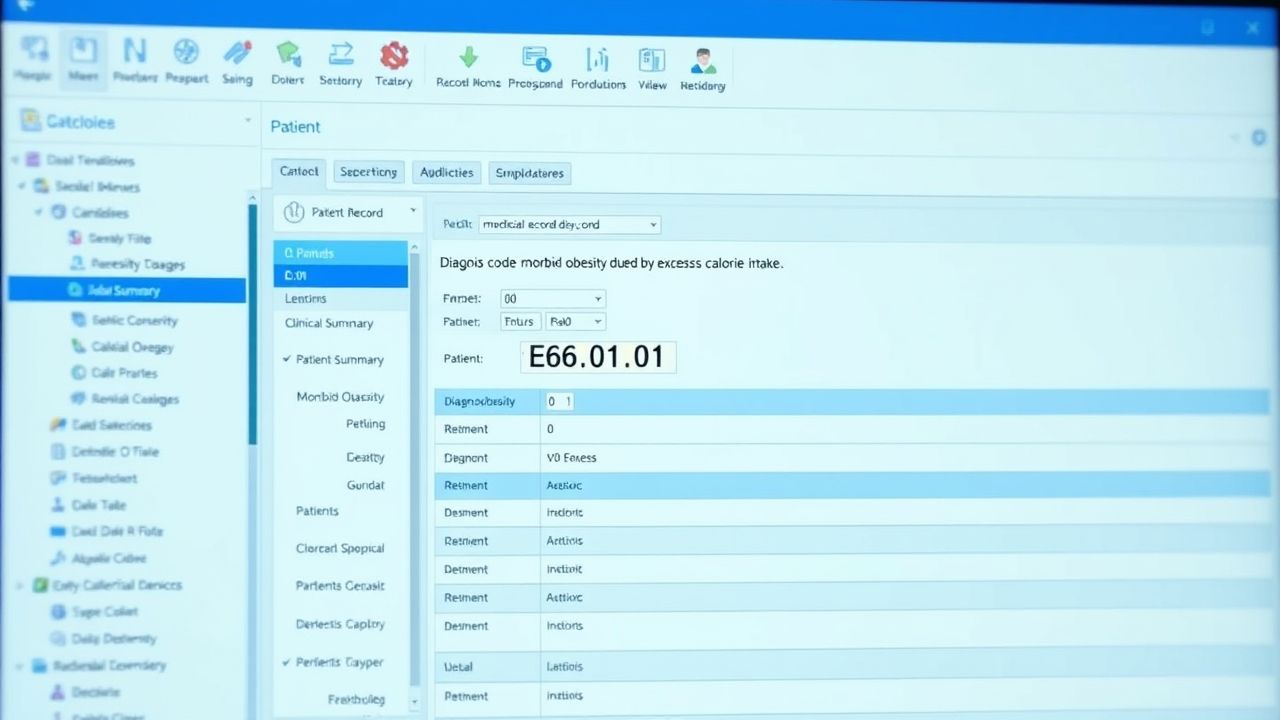
Role of E66.01 Diagnosis Code
The E66.01 Diagnosis Code is one of the most commonly used ICD-10 codes. This indicates sick (severe) obesity due to more calories, and usually applies when the patient’s BMI exceeds 40.
The correct use of the E66.01 diagnosis code is important as it distinguishes between normal obesity and severe, sick obesity, which can qualify patients for specific treatments such as bariatric surgery.
Why Precise Coding Matters in Healthcare
Using the correct obesity ICD-10 code has a lot of benefits:
- Benefits the patient directly: Class 1 obesity ICD 10, class 2 obesity ICD 10, and class 3 obesity ICD 10 not only clarify the situation but also guide the healthcare providers in delivering the right treatment.
- Insurance funds the claims: E66.01 diagnostic codes, among others, are usually requested by the insurance to give a green light to the administration of obesity-related therapies.
- Contributes to public health research: Recording of data, childhood obesity ICD 10, and obesity history in children are the main sources for the development of preventive programs.
- Find out what other diseases are common with: severe obesity poorly differentiates from diabetes and heart diseases, therefore becomes detailed coding becomes necessary.
How to Use the Obesity ICD-10 Codes Effectively
Healthcare professionals can accurately document obesity by implementing the following steps:
- Measure BMI: Determine whether the patient falls under class 1, 2, or 3 obesity ICD-10.
- Identify contributing factors: Note that if obesity is due to more calories, genetic factors, or other reasons.
- Select the correct code: Use the E66.01 diagnosis code for obesity related to severe calorie, or other relevant obesity ICD 10 codes.
- Include Comorbidities: For patients with conditions like diabetes or high blood pressure, documentation of both obesity and Comorbid status.
- Update the patient’s record: If the patient has a history of obesity ICD 10, continue to include it in the documentation.
Special Consideration: Childhood and Severe Obesity
Childhood Obesity ICD 10
Pediatric obesity is a dangerous trend with increasing cases globally. The correct coding under childhood obesity ICD-10 allows initial detection and intervention, reducing the risk of lifetime health issues.
Severe Obesity ICD-10
When severe obesity ICD-10 codes are involved, 10 coding accuracy is particularly important. Patients with class 3 obesity ICD-10 10 may require bariatric surgery or other advanced treatments, which require the appropriate documentation and approval.
Question on Obesity ICD-10 Code
What is the ICD-10 Code for Obesity?
The ICD-10 codes for obesity fall under the E66 category, which varies depending on seriousness and cause.
What is the Difference Between E66.01 and E66.09?
- E66.01 Diagnosis Code: Militant (severe) obesity due to more calories.
- E66.09: Other obesity due to additional calories, not classified as sick.
What is the ICD-10 Code for More than 30?
More than 30 of BMI Class 1 obesity ICD 10 (General Obesity, E66). The codes may vary whether BMI is 30–34.9, 35–39.9, or 40+ or not.
Is BMI Serious Obesity?
Severe obesity, or class 3 obesity ICD 10, is defined as a BMI of 40 or higher. This condition is often documented with the E66.01 diagnostic code.
Clear Health Service Through Accurate Coding
It is more than a technical function to master the Obesity ICD 10 code – it is about improving patient results, enabling effective treatments, and supporting smart health care systems. Class 1 obesity ICD-10 to class 3 obesity ICD-10, and childhood obesity ICD-10 to the history of obesity ICD-10, each code plays an important role in patient care.
By understanding and implementing codes such as E66.01 diagnosis code, healthcare provider ensures accuracy, improve communication, and contribute to better public health data. Accurate coding leads to smart healthcare decisions for patients, providers, and systems.
 Complete and Clear Guide for ICD 10 Code for Obesity
  Clear Guide to Morbid Obesity ICD 10
  Depression Isn’t Just Sadness: A Psychiatrist Explains the Difference
  Criminal Defense Firm DCD LAW: A Client-Centered Approach to Protecting Rights
  What Actually Happens During a 200-Hour Yoga Teacher Training
  Why Every Chiropractor Needs Professional Liability Insurance: Lessons from the Clinic