
Clear Guide to Morbid Obesity ICD 10

Table of Contents
Why Morbid Obesity ICD 10 is Important
Firstly, medical coding accuracy is a must in the whole healthcare system, especially for cases like morbid obesity ICD-10. This classification keeps track of patients through doctors, hospitals, and insurance suppliers, thus facilitating diagnostics, therapy, and treatment of patients, plus ensuring correct billing.
Moreover, the morbid obesity ICD 10 code is a reference for the documentation of those body movements in a standardized way that are extremely close to the health issues of diabetes and cardiovascular disease, as well as all the other diseases that occur together with that. By getting more knowledge on codes like E66.01, the medical staff can do their job with much more efficiency, and patients get an insight into their diagnoses.
Breaking Down the Meaning of Morbid Obesity in ICD-10
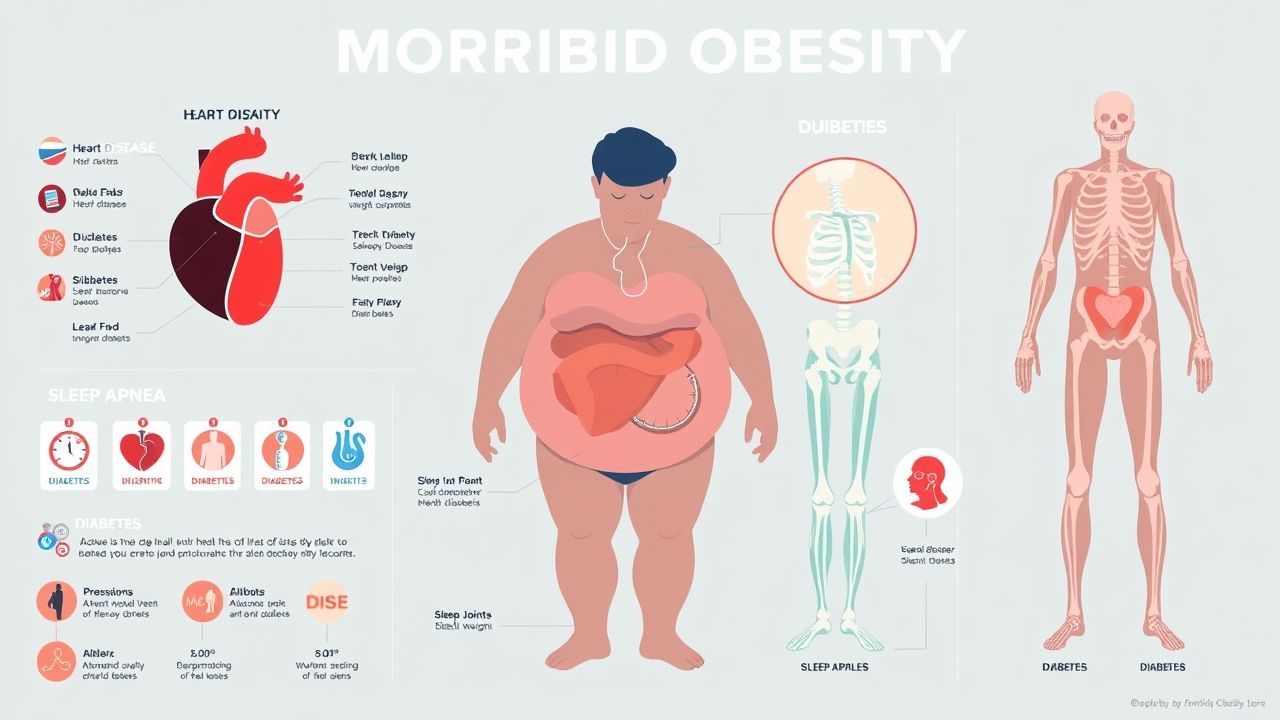
Actually, morbid obesity means excessive body mass that is so great that it becomes a health risk to a person. The BMI for morbid obesity ICD-10, is 40 or above, or 35 or above with obesity-associated conditions like high blood pressure, sleep apnea, or type 2 diabetes.
- Severe morbid obesity ICD-10: This term describes such situations where obesity is the source of life-threatening health hazards.
- Super morbid obesity ICD 10: This term is applied to persons having a BMI of not less than 50, i.e., to the most critical cases.
Moreover, proper documentation clarifies that these differences are not just recognized by clinicians at hospitals but are known by insurance providers as well.
What Are the ICD-10 Codes for Morbid Obesity?
The ICD-10 coding puts a spotlight on various types of obesity and assigns a different code for each. The main morbid obesity codes consist of:
1. E66.01 – Morbid Obesity Due to Excess Calories
- The most common morbid obesity ICD 10 code.
- Refers to severe obesity caused primarily by excessive caloric intake.
- Often used in medical records and insurance claims for bariatric surgery.
2. Severe Morbid Obesity ICD-10
- Categorized under E66 with additional notes based on severity.
- Recognized as a critical health condition that requires immediate attention.
3. Super Morbid Obesity ICD-10
- Refers to individuals with a BMI over 50.
- While not always explicitly separated in coding, many providers note “super morbid obesity” under the E66.01 diagnosis code for clarity.
4. History of Morbid Obesity ICD-10
- Applied when a patient, after treatment (such as bariatric surgery), is no longer obese, but their health record indicates that they had morbid obesity.
- Essential for recording patients’ condition changes over the years.
The Role of E66.01 in Medical Coding
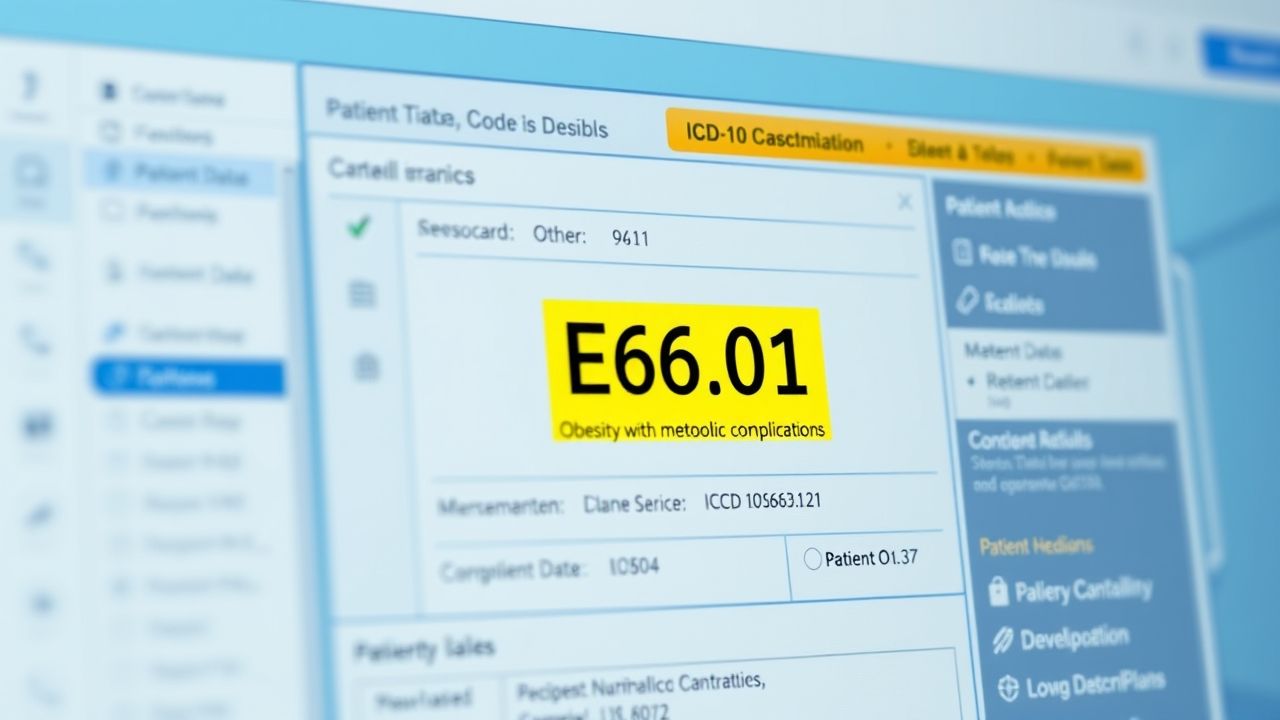
The E66.01 diagnosis code is main for reporting morbid obesity, where the main cause is excessive food intake. It is one of the most commonly used codes since overeating is the major reason for obesity all over the world.
Adding E66.01 to patient records allows insurance and healthcare providers to be aware of the severity of the situation. As a result, patients are eligible for specialized treatments or surgical interventions.
Why Accurate Coding is Essential
Choosing the correct morbid obesity ICD 10 code has a ripple effect on:
- Patient Care: Proper recording of severe morbid obesity ICD 10 or super morbid obesity ICD 10 leads to the right medical treatment of the patients.
- Insurance Coverage: E66.01-type codes serve as a basis for the surgery, like a bariatric procedure.
- Public Health Research: Monitoring of cases, such as a history of morbid obesity ICD-10 10 facilitates long-term health risk studies.
- Global Health Records: ICD-10 codes help to have the same data across hospitals and countries.
Practical Use in Healthcare
For healthcare providers, applying the right code is a systematic process:
- Calculate BMI – Identify whether the patient falls into the category for morbid obesity ICD-10.
- Check Comorbidities – If BMI is 35–39.9 with additional health issues, morbid obesity can still be coded.
- Assign the Right Code – Use E66.01 or related codes for severe morbid obesity ICD-10 or super morbid obesity ICD-10.
- Update Records – If a patient has a history of morbid obesity ICD-10, it should be noted even after weight loss.
FAQs on Morbid Obesity ICD-10
What is the correct ICD-10 code for morbid obesity?The correct morbid obesity ICD 10 code is E66.01, which specifies morbid obesity due to excess calories. Other variations may exist for different causes.
What is the difference between E66.09 and E66.01?
- E66.01: Morbid obesity due to excess calories.
- E66.09: Other obesity due to excess calories, but not specifically classified as morbid.
What is considered morbid obesity?
Morbid obesity is defined as having a BMI for morbid obesity ICD 10 of 40 or greater, or 35 or greater with serious obesity-related conditions.
What is the ICD-10 code for R29.6?
The ICD-10 code R29.6 refers to repeated falls, a symptom code often linked to mobility issues seen in patients with severe morbid obesity ICD 10 or related conditions.
Smarter Healthcare with Precise Coding
The significance of the morbid obesity ICD-10 code cannot be overemphasized as it forms the basis for accurate patient outcomes, appropriate insurance, and correct public health data recording. Starting from the E66.01 diagnosis code to narrating the history of morbid obesity ICD-10, coding accuracy is the guarantee that patients get the right care.
It makes no difference whether you are talking about severe morbid obesity ICD 10 as a topic, super morbid obesity ICD 10 as an issue, or just wanting to understand the BMI for morbid obesity ICD 10 better. Every step we take towards healthcare becoming smarter is the step we take by healthcare professionals learning these codes.
 Complete and Clear Guide for ICD 10 Code for Obesity
  Obesity ICD-10 Code for Smart Healthcare
  Depression Isn’t Just Sadness: A Psychiatrist Explains the Difference
  Criminal Defense Firm DCD LAW: A Client-Centered Approach to Protecting Rights
  What Actually Happens During a 200-Hour Yoga Teacher Training
  Why Every Chiropractor Needs Professional Liability Insurance: Lessons from the Clinic